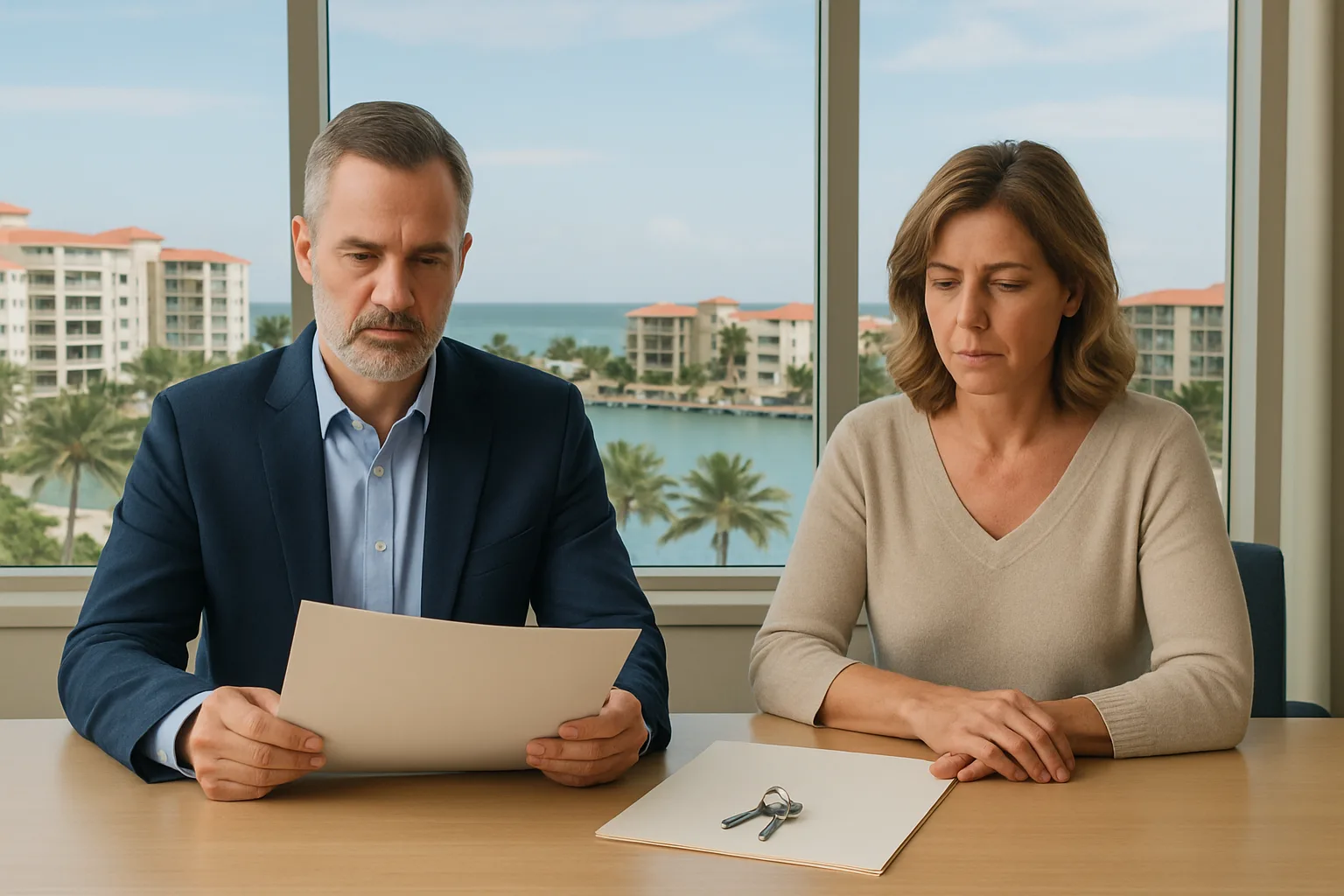
Florida Timeshare Transfer After Divorce in Boca Raton
A timeshare can remain financially and legally connected to both former spouses even after a divorce is final. If the property is in Florida, a Florida timeshare transfer after divorce may involve more than signing a quitclaim deed or relying on language in a divorce judgment. The resort, lender, county land records, and former spouses may each view the transaction differently.
For someone handling a Boca Raton divorce timeshare issue, the first challenge is identifying what changed and what did not. A court order may assign responsibility between spouses, but it may not automatically change the resort contract or release a borrower from financing. Boukzam Law helps clients examine these separate layers before they communicate with a resort or sign transfer paperwork.
This guide explains how title and liability can differ, provides a document checklist, and discusses possible transfer and exit options under Florida law. Because individual contracts, recorded instruments, and divorce orders vary, a Florida-licensed attorney can evaluate the specific circumstances.
What a Florida Timeshare Transfer After Divorce May Change
A timeshare usually involves several related records rather than one document. The deed or other ownership record may identify the legal owners. A purchase contract, membership agreement, maintenance-fee account, and financing agreement may impose separate duties. A transfer therefore needs to be reviewed as a group.
Divorce judgment versus recorded title
A Florida divorce judgment may state which spouse receives the timeshare or who must pay its expenses. That order can be important between the former spouses. It does not necessarily function as a new deed, however, and it may not instruct a resort or lender to remove a borrower from its records.
A quitclaim deed can transfer whatever interest the signing person has in real estate, but it generally does not promise that the recipient owns clear title or that a creditor will release the transferring person. Whether a deed is effective also depends on proper execution, delivery, recording, and the legal description. The Palm Beach County Clerk of the Circuit Court and Comptroller maintains county recording functions, but recording alone may not change a private contract.

Title is not the same as contract liability
Removing a spouse from a timeshare deed in Florida may change ownership records without ending obligations under a financing agreement or resort contract. Conversely, a resort may approve an account change while a deed still lists both spouses. These distinctions are why informal promises and unsigned emails should be treated cautiously.
Documents to Review Before Contacting the Resort
Before requesting a transfer, deed-back, assumption, or other exit option, a person may benefit from organizing the complete record. The goal is to determine who owns the interest, who owes money, and what the resort will require.
A useful checklist includes:
- Divorce judgment and related marital settlement agreement: Look for provisions assigning the timeshare, payment duties, sale obligations, indemnification, or cooperation with a transfer.
- Current deed or ownership certificate: Confirm the names, vesting language, legal description, recording information, and whether the document covers a deeded interval or another ownership structure.
- Resort account records: Gather statements, maintenance-fee notices, reservation or points records, account correspondence, and any default or collection notices.
- Purchase and financing agreements: Review the original purchase contract, promissory note, security documents, payment history, and provisions concerning transfer, assumption, acceleration, or release.
- Transfer, resale, or deed-back forms: Keep blank or completed forms supplied by the resort, including instructions about approval, fees, taxes, or continued liability.
- Written release or assumption agreement: Look for a document expressly releasing a former spouse, borrower, or guarantor. A general promise to pay may not have the same effect.
The checklist can reveal gaps that are easy to miss during a stressful separation. For example, a divorce agreement may allocate maintenance fees but say nothing about a loan. A resort transfer form may change membership records but contain language reserving claims against prior owners. In Boca Raton, Florida, local recording information can help confirm what appears in the public record, while the contract file may answer different questions.
Transfer, Liability, and Exit Options in Florida
Once the documents are assembled, the available path depends on the ownership structure, account status, financing, and the terms of the divorce order. No single option fits every Florida timeshare dispute. Potential routes may include:
- Voluntary transfer to one former spouse: The resort or managing entity may require an application, financial review, updated deed, assumption paperwork, or evidence that the transfer is permitted.
- Sale or approved resale: A resale may be possible in some circumstances, but any loan balance, resort rules, transfer fees, and market conditions need careful review. A proposed buyer should not be assumed to release existing owners without written confirmation.
- Deed-back or surrender program: Some resorts offer a voluntary surrender process. Eligibility, fees, acceptance, and the effect on debt or future claims depend on the written terms.
- Contract or liability review: If there are disputed signatures, misrepresentations, account charges, collection activity, or unclear release language, an attorney may evaluate potential defenses, negotiations, or other remedies.
- Court-related enforcement between former spouses: If one party does not follow a divorce judgment, the family-law court may be relevant to enforcement between the spouses. That proceeding may still be separate from the resort’s contract rights.
A former spouse should not assume that a quitclaim deed ends timeshare liability after divorce. The same caution applies to an informal agreement to “take over payments.” Until the relevant parties provide a written release or other legally effective change, the original obligations may remain disputed or enforceable under the governing documents.
Florida law governs many Florida real-estate and timeshare questions, but the contract may contain additional provisions, and laws can vary by location and change over time. A person in Boca Raton may also need to distinguish Palm Beach County recording issues from a resort’s corporate procedures or a lender’s requirements.
Common Mistakes When Handling a Divorce Timeshare
The most common problems arise when someone treats one document as controlling every part of the transaction. A divorce judgment, deed, resort account, and loan can each serve a different purpose. Reviewing them together is often more informative than relying on a single sentence or conversation.
Other mistakes may include:
- Signing a quitclaim deed without checking whether financing or resort obligations remain.
- Assuming the resort removed a spouse because a customer-service representative changed an account field.
- Ignoring maintenance-fee statements, assessment notices, or collection correspondence while ownership is being sorted out.
- Sending the resort incomplete documents and creating confusion about the requested transfer.
- Paying a third party for an exit service without understanding its contract, authority, fees, or promised result.
- Failing to preserve copies of the divorce order, recorded instruments, account history, and all written communications.
A careful review generally starts by identifying the requested outcome: transfer to one spouse, sale, surrender, negotiation, or clarification of liability. An attorney may then compare that goal with the recorded title, the resort’s requirements, and any financing or release language. This process can help a person communicate more precisely and avoid making statements that unintentionally affect available options.
Frequently Asked Questions
Does a Florida divorce decree automatically remove a spouse from a timeshare deed?
Usually, a divorce decree and a deed are separate records. A judgment may allocate the timeshare between former spouses, but changing the public ownership record may require a properly prepared and recorded instrument. The resort and any lender may also require separate documentation. Because the effect depends on the wording and ownership structure, a Florida attorney can review the judgment and deed together.
Can a quitclaim deed release my former spouse from timeshare debt?
A quitclaim deed generally concerns an interest in real property; it does not automatically amend a promissory note, resort contract, or personal guarantee. A former spouse may remain responsible to a lender or resort unless the applicable agreement provides an effective release or other change. The written financing and account documents are important when evaluating timeshare liability after divorce.
What should I request from a resort before approving a transfer?
A person may request written confirmation of the resort’s transfer requirements, account status, fees, approval conditions, and the effect on each former owner. Depending on the situation, it may also be useful to ask whether the resort will issue an assumption agreement, release, or updated account documentation. The proposed paperwork should be reviewed carefully before it is signed.
Are timeshare deed-back programs available to Florida owners?
Some timeshare companies may offer voluntary surrender or deed-back programs, but availability and terms differ. A program may have eligibility rules, costs, processing requirements, or language addressing unpaid balances and future liability. It should not be assumed that accepting a deed-back ends every obligation. Reviewing the written offer with a qualified attorney may help clarify its legal effect.
How Boukzam Law Can Help
Boukzam Law is dedicated to helping Florida timeshare owners understand the relationship between divorce orders, recorded title, resort accounts, financing, and proposed exit documents. For clients in Boca Raton, FL and throughout Florida, the firm can review the relevant records, identify questions about transfer or liability, and help evaluate available legal options without treating a single document as the whole answer.
The team is committed to fighting for clients’ rights and is ready to evaluate the circumstances surrounding a Florida timeshare transfer after divorce. Contact Boukzam Law to request a free consultation or case evaluation and discuss the documents that may matter to your situation.
The information in this article is for educational purposes only and does not constitute legal advice. Contact a qualified attorney licensed in Boca Raton, FL; Florida for advice specific to your situation.
